
Jennifer Chicoine sees a basic limitation in traditional therapy.
A therapist can spend an hour helping someone understand a problem, establish goals and learn new ways to respond to it.
Then the appointment ends.
“If we really think about it, we see them for one hour a week,” Chicoine said. “What happens in the other 167 hours?”
A 2023 systematic review of 25 studies involving more than 1,300 psychotherapy clients noted that previous research has linked patients’ completion of therapeutic work between sessions with better treatment outcomes.
But even with that awareness, 167 hours is a long time to fill.
The question of how to fill that time that has increasingly shaped Chicoine’s work at Peaceful Healing Counseling Services, the Orland Park practice she founded in 2023. And now with WayPoint, a behavioral health platform she is developing, she believes she may have the answer.
Getting to that answer took a lot more than 167 hours.
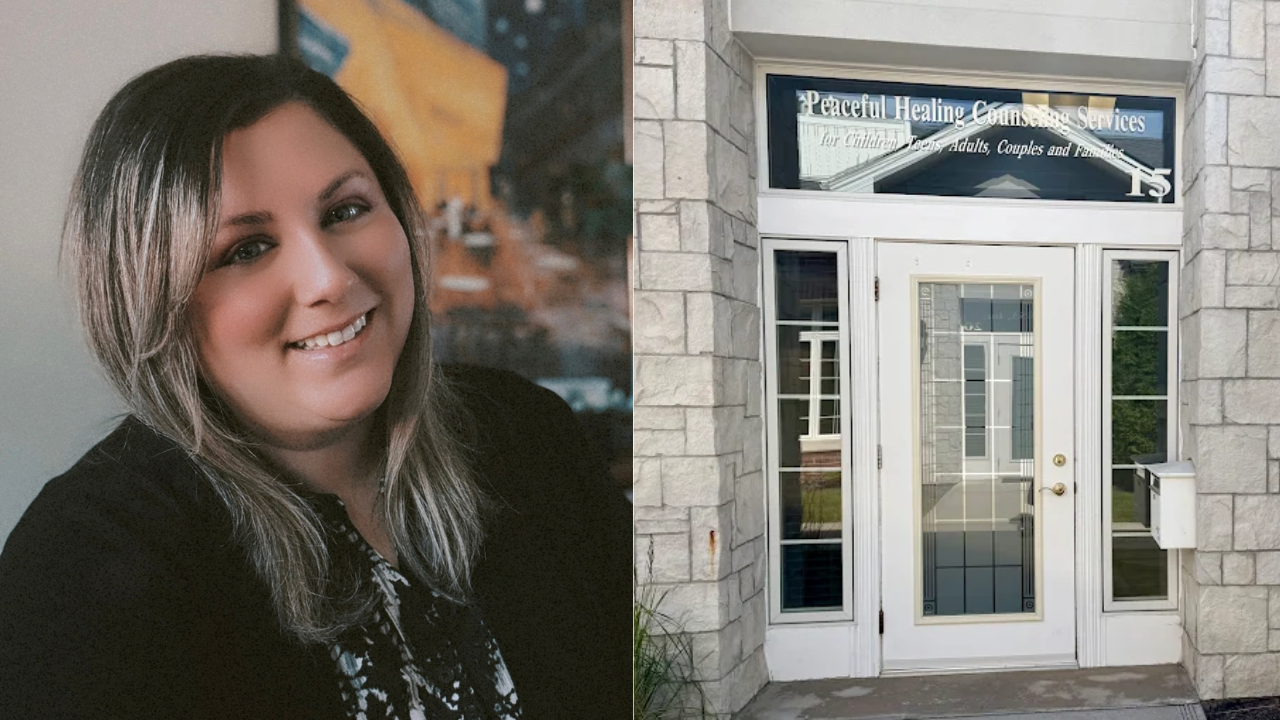
Finding Peace at 15
Chicoine grew up in a law enforcement household. Her father worked as a Cook County corrections officer, while her mother worked full time, raised three children and managed the pressures at home.
Chicoine said her father carried trauma of his own and used alcohol to cope. At home, she experienced psychological abuse and some physical abuse.
By 15, Chicoine was struggling with self-harm and suicidal thoughts.
She decided she wanted therapy.
“I took on that role of, I want to go to therapy. I want to get better. I want to learn things,” Chicoine said.
She began reading psychology books and articles, initially hoping that understanding mental health might help her understand her family.
“I think part of me, the motivation was, if I just understand it, then maybe I can get my family back to a healthy spot,” Chicoine said. “I took on this role of wanting to heal them … because I loved them. They were my whole world.”
Instead, the process helped shape her own life.
“From 15 on, one of my values was finding peace,” Chicoine said. “And I did that through healing myself through mental healthcare, and I am dedicated to the field because it saved me. And that’s why Peaceful Healing is the name that it is.”
The Other 167 Hours
Chicoine entered the mental health field in 2017 and became licensed in 2019. She began in inpatient care before moving through partial hospitalization and intensive outpatient settings, then into outpatient care in 2021. She opened Peaceful Healing in 2023.
So she’s experienced that 167-hour time sink for a lot longer than 167 hours.
And WayPoint is her answer.
She describes WayPoint as a dual-facing platform designed both to give clinicians a fuller picture of treatment and to give clients more transparency and support between appointments. It would allow clients to see treatment goals, complete work assigned by their therapist, access therapeutic exercises and assessments and practice skills based on approaches such as cognitive behavioral therapy and dialectical behavior therapy. Chicoine also imagines interactive features that could help clients practice difficult situations using artificial intelligence.
It isn’t the first time Chicoine has tried to carry therapeutic tools beyond the therapy room.
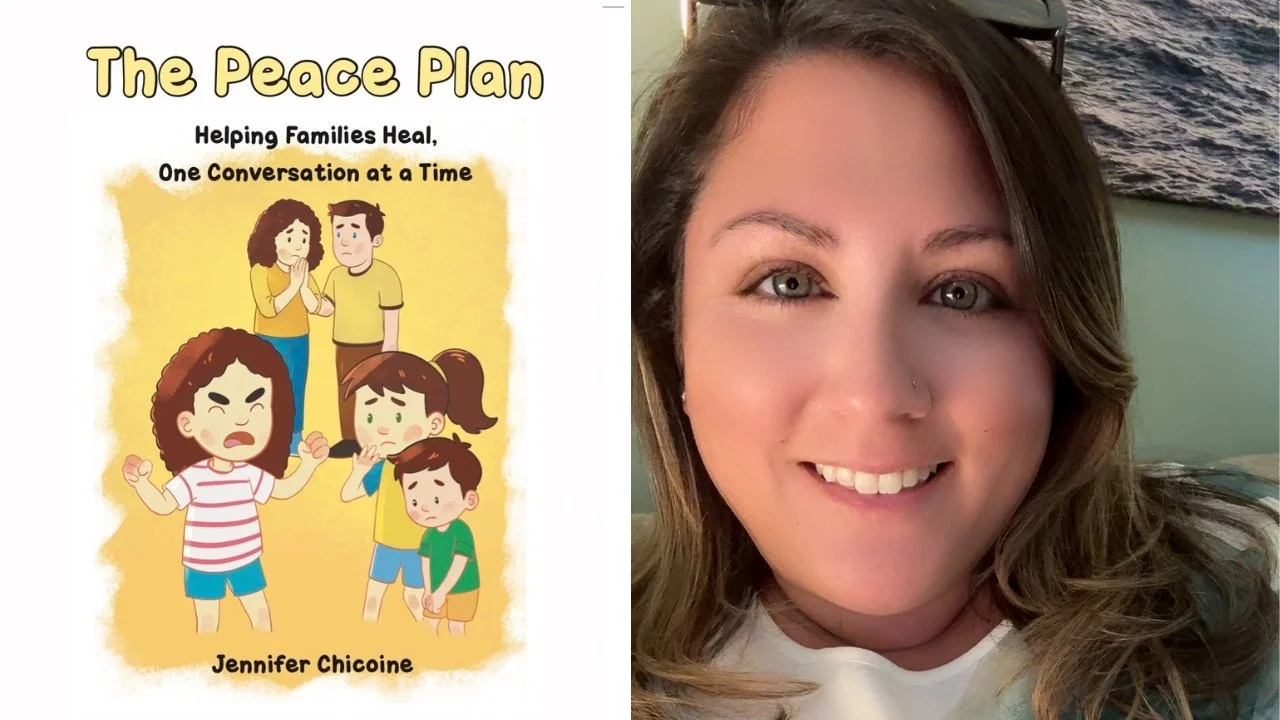
She wrote The Peace Plan, a children’s book inspired by her own family and designed to teach practical skills for conflict, communication and repair. It introduces concepts including listening, validation and accountability in language intended for children and families.
Chicoine hopes to bring the concept into schools and eventually develop a second book geared more specifically toward conflict resolution in the classroom.
Support Beyond the Therapy Room
Her own family history has influenced another project as well.
As mentioned, Chicoine’s mother was a law enforcement wife. Today, Chicoine is one herself.
She recently created a support group for police wives focused on stress, relationships and resilience. The first cohort did not attract enough interest to launch, so Chicoine has decided not to prioritize the project for now.
But she remains passionate about the underlying issue.
“I would very much like to provide intentional skills and empowerment for police wives,” Chicoine said. “I’m trying to create a safe space for us.”
As Chicoine has expanded beyond traditional therapy, she has also had to navigate the business side of turning ideas into programs and products.
That brought her to the Southland Development Authority’s (SDA’s) Jamie Makuch.
“I’m a therapist first,” Chicoine said. “I very much so try to stay in my lane. So I lean on the community and people who are experts in this.”
Working with Makuch, she said, has given her resources to explore unfamiliar territory with greater confidence.
“I’m not kind of trudging through waters that I’m unfamiliar with,” Chicoine said. “You guys are kind of giving me the platform and the support to explore in a safe way.”
Nearly all of Chicoine’s work traces back to the same instincts she developed as a teenager.
Asked what she is most proud of, and what she hopes comes next, Chicoine did not point to the practice, the book or the platform she is building.
She pointed to herself.
“At the end of the day, we’re humans, right?” Chicoine said. “Aside from all the accolades and all the accomplishments, we’re human beings.”
For someone who began searching for answers at 15, that growth remains the accomplishment she values most.
“I am most proud of the human being I am today,” Chicoine said, “because I feel like I’m really making a difference and contributing to society in a way that’s going to benefit society.”
About the Southland Development Authority
The Southland Development Authority, a not-for-profit economic development organization, is committed to driving equitable and sustainable economic growth in the South Suburbs of Chicago. Through innovative programs, strategic partnerships, and impactful direct investments, the SDA is building a vibrant, inclusive economy that drives wealth growth for individuals, businesses, and municipalities. Combined with the benefits of the South Suburban Land Bank and the Monarch Fund, the SDA serves as a model for regional development.
